

Pride and Prejudice · 1813
Elizabeth Bennet
The quick, laughing heroine of Pride and Prejudice
Elizabeth Bennet is the heroine of Jane Austen’s Pride and Prejudice: the second of five daughters of a Hertfordshire gentleman, twenty years old, clever, playful and certain of her own judgement, until a proud man named Mr Darcy proves her wrong and she has the honesty to admit it.
-
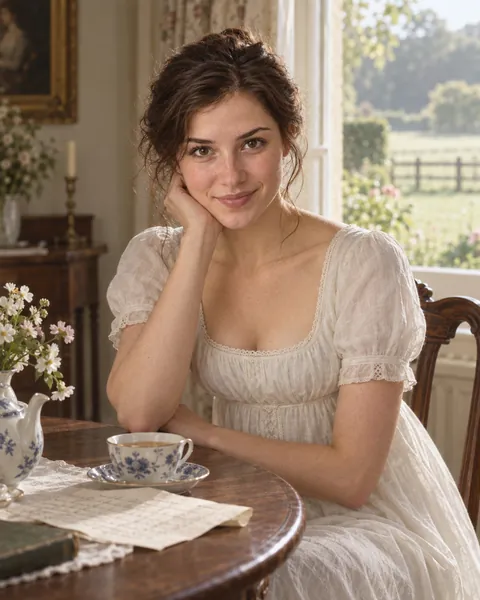 Elizabeth Bennet
Morning at Longbourn
-
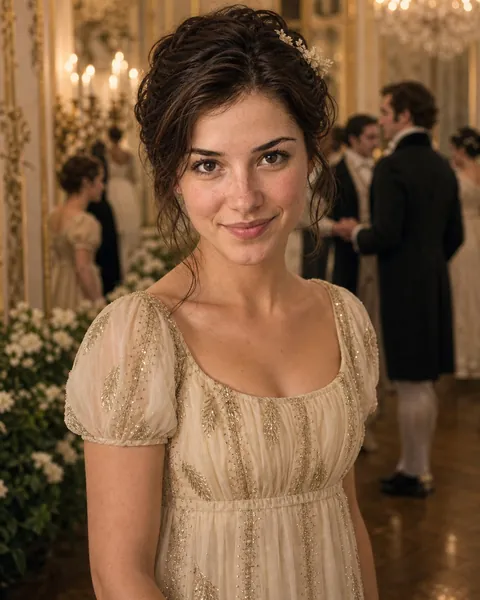 Elizabeth Bennet
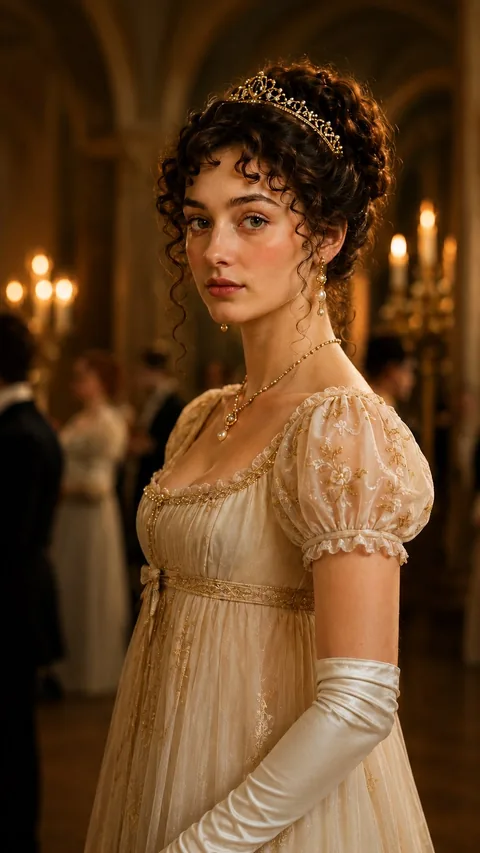
The Netherfield Ball
-
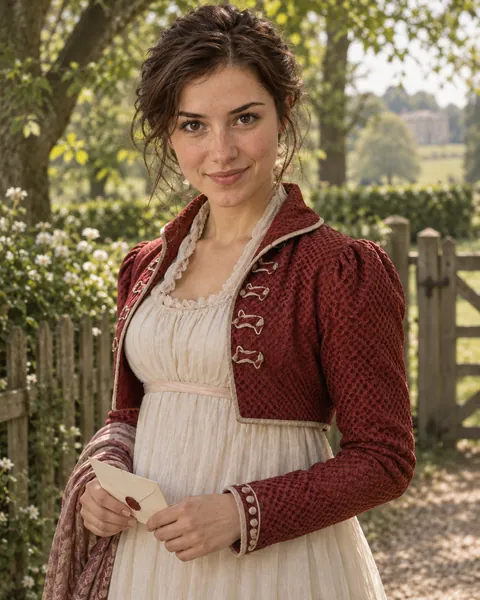 Elizabeth Bennet
A Walk at Rosings
Elizabeth Bennet’s three looks in the Jane Austen Photo Studio app.
Elizabeth Bennet at a glance
- Name
- Elizabeth Bennet, “Lizzy” to her family, “Eliza” to Miss Bingley
- Age
- 20: she tells Lady Catherine she is “not one-and-twenty” (chapter 29)
- Family
- Second of the five Bennet sisters of Longbourn, Hertfordshire
- Fortune
- “One thousand pounds in the 4 per cents”, after her mother’s death
- Closest to
- Her elder sister Jane, her friend Charlotte Lucas, and her father
- Proposals
- Mr Collins (refused), Mr Darcy (refused, then accepted)
- Marries
- Mr Darcy, and goes to live at Pemberley
- Famous line
- “My courage always rises with every attempt to intimidate me.”
Who is Elizabeth Bennet?
Elizabeth is the second daughter of Mr and Mrs Bennet of Longbourn, a small estate a mile from the market town of Meryton. Because the estate is entailed on a male cousin, the five sisters will have almost nothing when their father dies, which is why their mother’s whole business in life is getting them married. Elizabeth is her father’s favourite. In the very first chapter he says “Lizzy has something more of quickness than her sisters”; her mother, by contrast, likes her least of all her children.
Austen introduces her through one quality above all: “a lively, playful disposition, which delighted in anything ridiculous” (chapter 3). She reads character for a hobby, argues for the pleasure of it, and refuses to be bullied by anyone, from Mr Collins to the great Lady Catherine de Bourgh. She is also physical and impatient in a way polite society notices: when Jane falls ill at Netherfield, Elizabeth walks three miles across muddy fields to nurse her, and Bingley’s sisters spend the evening sneering at her petticoat, “six inches deep in mud”.
“Follies and nonsense, whims and inconsistencies, do divert me, I own, and I laugh at them whenever I can.”
Jane Austen herself adored her. In a letter to her sister Cassandra on the novel’s publication in January 1813 she called Elizabeth “as delightful a creature as ever appeared in print”.
How old is Elizabeth Bennet?
Elizabeth is 20 for most of the novel. When Lady Catherine presses her on her age at Rosings, she answers with a smile: “I am not one-and-twenty.” That makes her about eight years younger than Mr Darcy, who is 28, and about two years younger than Jane, whom Lydia calls “almost three-and-twenty”. Lydia, the youngest, is fifteen when the story opens.
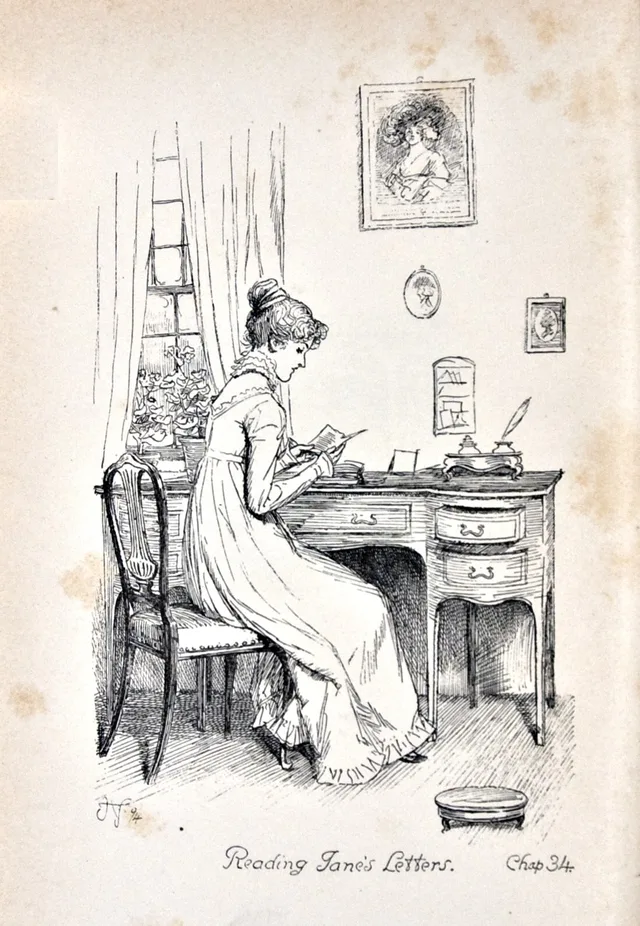
Twenty was a perfectly ordinary age to be unmarried in Elizabeth’s world. What makes her position urgent is money, not age: with a fortune of one thousand pounds she cannot expect a rich husband, and her friend Charlotte Lucas, at twenty-seven, accepts the absurd Mr Collins precisely because she has no other prospect of a home of her own.
Elizabeth Bennet’s fatal flaw: quick judgement
If Darcy is the pride of the title, Elizabeth is the prejudice. Austen’s first title for the novel was First Impressions, and Elizabeth’s are fast, witty and often wrong. Wounded by Darcy’s remark at the assembly (“She is tolerable: but not handsome enough to tempt me”), she decides he is proud and unpleasant, and when the charming Mr Wickham tells her Darcy cheated him of a living, she believes every word, because she wants to.
Her other weakness is vanity, and she names it herself. After reading Darcy’s letter in chapter 36 she sees that she has been flattered by Wickham’s attention and offended by Darcy’s neglect, and has reasoned from both:
“Till this moment, I never knew myself.”
A few lines earlier: “vanity, not love, has been my folly.” It is the turning point of the novel, and the reason readers trust her afterwards.
What makes Elizabeth a heroine rather than a cautionary tale is what she does next. She does not excuse herself, and she does not swing to the other extreme. She revises her opinion of Darcy slowly, on evidence. She tells Jane the truth, but refuses to make his letter public, because “every particular relative to his sister was meant to be kept as much as possible to myself”.
Elizabeth Bennet and Mr Darcy
Their story is a sequence of misreadings. At the assembly he slights her; at Netherfield she teases him and he begins to admire her “fine eyes”; at the Netherfield ball they dance and quarrel about Wickham; at Rosings he keeps finding her on her solitary walks, and she thinks he is checking up on her. Then, at Hunsford parsonage, he proposes, and she refuses him in the most famous rejection in English fiction.
“I had not known you a month before I felt that you were the last man in the world whom I could ever be prevailed on to marry.”
His letter changes her mind about the facts; Pemberley changes her heart. In Derbyshire she sees his house, hears his housekeeper praise him, and meets a changed man who is kind to her aunt and uncle. When Lydia elopes with Wickham, Darcy quietly arranges the marriage and pays for it, and Elizabeth learns what he has done only by accident. In chapter 58 he proposes again, and she accepts.
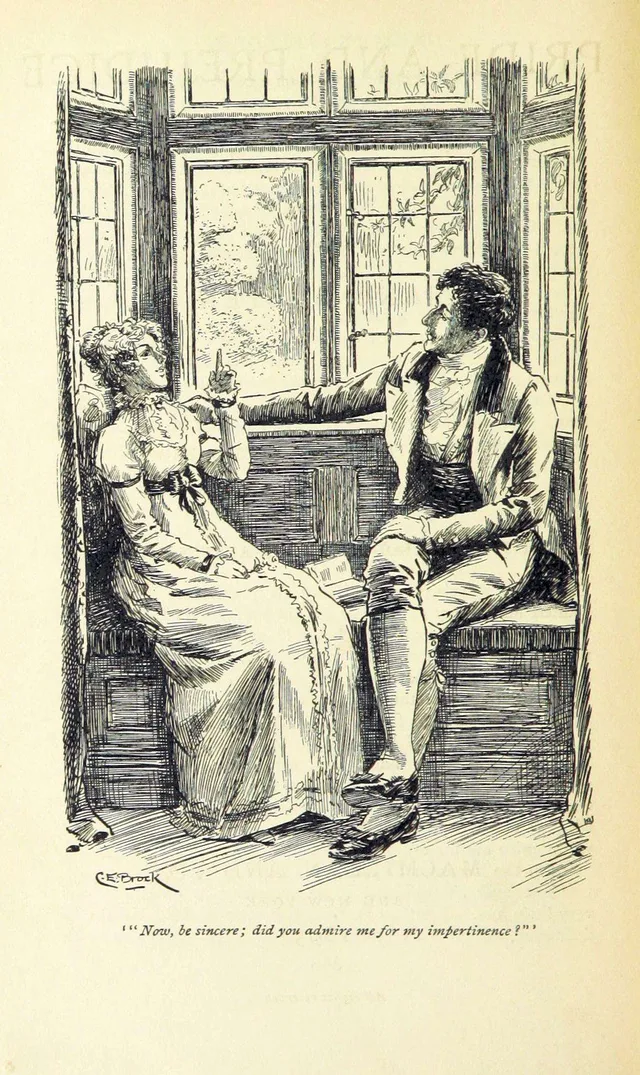
Did Elizabeth really love Darcy?
Yes, and the novel takes care to prove it, because even her own family doubts her. When Jane asks how long she has loved him, Elizabeth jokes that she must date it “from my first seeing his beautiful grounds at Pemberley”, then answers seriously. Her father, who believes she dislikes Darcy, warns her that she “could be neither happy nor respectable, unless you truly esteemed your husband”, and she convinces him by telling him everything Darcy has done. She chose him once she knew him, having refused him with Pemberley on the table.
Who falls in love with Elizabeth Bennet?
| Admirer | What happens | Chapter |
|---|---|---|
| Mr Darcy | Admires her “fine eyes” from chapter 6; proposes at Hunsford and is refused; proposes again and is accepted | 6, 34, 58 |
| Mr Collins | Her father’s cousin and heir proposes the morning after the Netherfield ball. She refuses; within three days he has proposed to Charlotte Lucas and been accepted | 19, 22 |
| Mr Wickham | Charms her with his story against Darcy, then transfers his attentions to Miss King, who has ten thousand pounds | 15, 26 |
| Colonel Fitzwilliam | Enjoys her company at Rosings, but warns her, gently, that “younger sons cannot marry where they like” | 30, 33 |
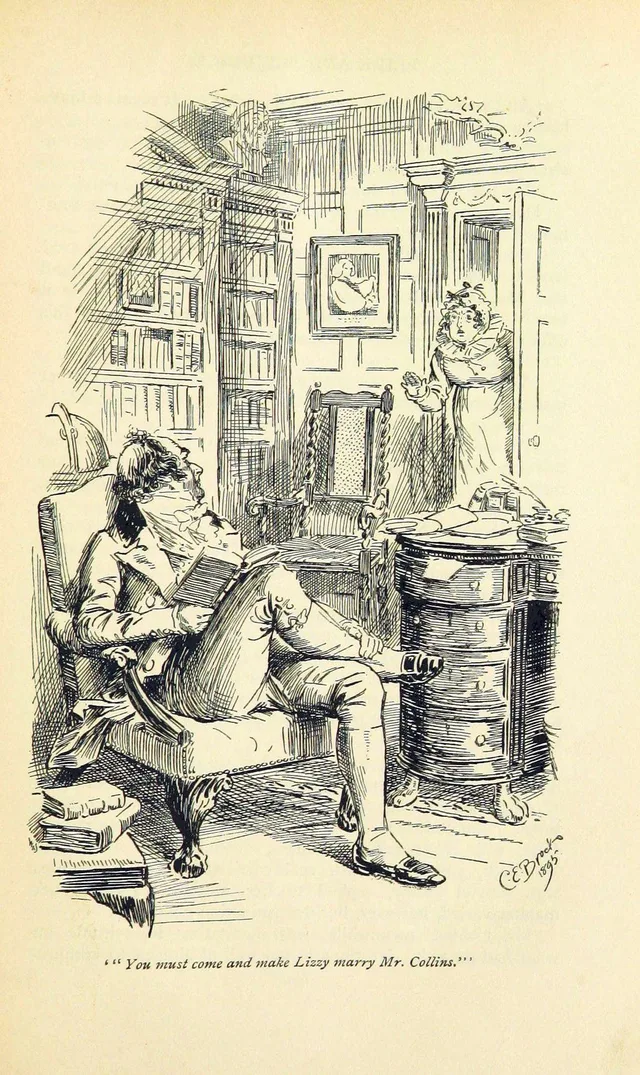
Refusing Mr Collins was a real risk. He would inherit Longbourn, and her mother insisted she accept. Her father’s ruling is one of the best jokes in the book: “An unhappy alternative is before you, Elizabeth. From this day you must be a stranger to one of your parents. Your mother will never see you again if you do not marry Mr. Collins, and I will never see you again if you do.”
Elizabeth and Lady Catherine de Bourgh
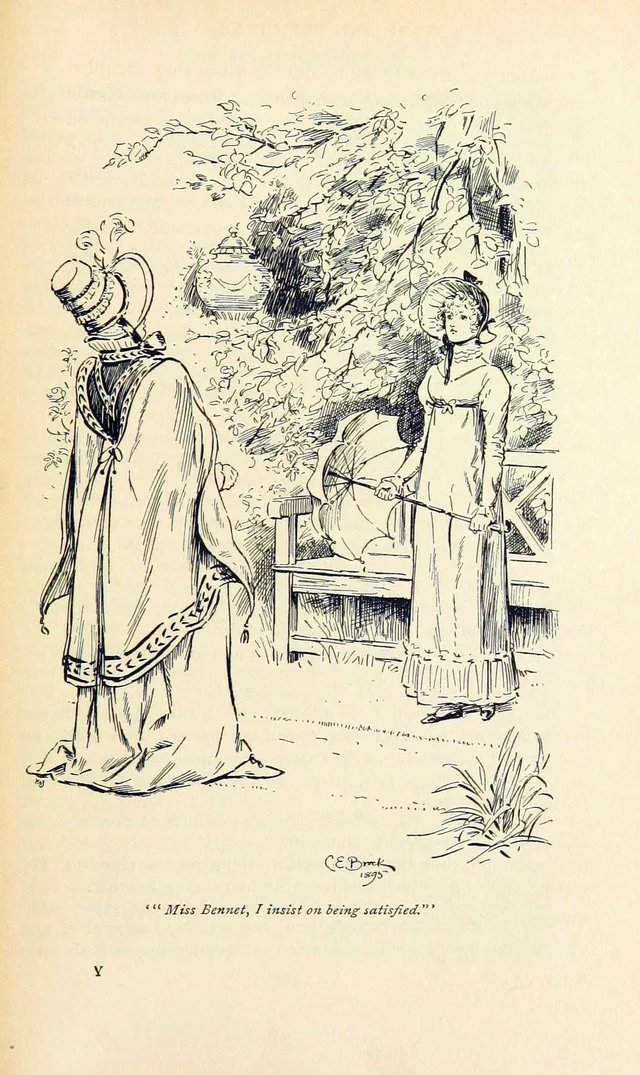
Her finest hour comes in chapter 56, when Lady Catherine drives from Kent to Longbourn to forbid a rumoured engagement to her nephew. Elizabeth is not engaged, and will not say whether she would accept him. Every threat is met with perfect calm.
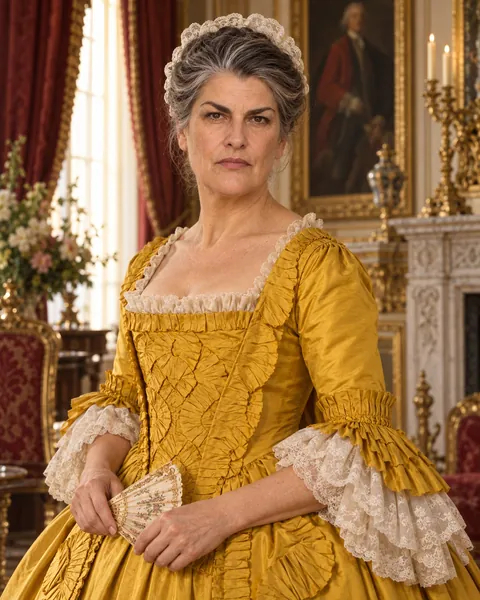
“He is a gentleman; I am a gentleman’s daughter; so far we are equal.”
She ends the interview with a sentence that could stand for the whole character: “I am only resolved to act in that manner, which will, in my own opinion, constitute my happiness, without reference to you, or to any person so wholly unconnected with me.” Lady Catherine reports the conversation to Darcy, and it gives him the hope he needs to ask again.
Elizabeth Bennet’s best quotes
| Line | Said to | Chapter |
|---|---|---|
| “I could easily forgive his pride, if he had not mortified mine.” | Charlotte Lucas and her family | 5 |
| “I dearly love a laugh.” | Mr Darcy | 11 |
| “You could not make me happy, and I am convinced that I am the last woman in the world who would make you so.” | Mr Collins | 19 |
| “There is a stubbornness about me that never can bear to be frightened at the will of others. My courage always rises with every attempt to intimidate me.” | Mr Darcy, at Rosings | 31 |
| “I had not known you a month before I felt that you were the last man in the world whom I could ever be prevailed on to marry.” | Mr Darcy | 34 |
| “Till this moment, I never knew myself.” | Herself | 36 |
| “He is a gentleman; I am a gentleman’s daughter; so far we are equal.” | Lady Catherine | 56 |
More from every character in our collection of Pride and Prejudice quotes.
Who played Elizabeth Bennet? Elizabeth on screen
Elizabeth Bennet is one of the most sought-after parts in English drama, and each generation has had its own. These are the major screen Elizabeths, from Hollywood in 1940 to Netflix in 2026.
| Year | Production | Elizabeth Bennet | Mr Darcy |
|---|---|---|---|
| 1940 | MGM film | Greer Garson | Laurence Olivier |
| 1980 | BBC series | Elizabeth Garvie | David Rintoul |
| 1995 | BBC series, written by Andrew Davies | Jennifer Ehle | Colin Firth |
| 2005 | Film, directed by Joe Wright | Keira Knightley | Matthew Macfadyen |
| 2026 | Netflix series, written by Dolly Alderton | Emma Corrin | Jack Lowden |
Jennifer Ehle won the BAFTA for Best Actress for the 1995 BBC series, and many readers still think hers the most faithful Elizabeth: quick, warm and amused, with the “fine eyes” Darcy cannot stop admiring.
Keira Knightley, close to Elizabeth’s own age of twenty, was nominated for the Academy Award for Best Actress for Joe Wright’s 2005 film, which plays up Elizabeth’s restlessness and the muddy, lived-in life of Longbourn.
In Netflix’s six-part series, released on 3 December 2026, Emma Corrin plays Elizabeth, with Jack Lowden as Mr Darcy, Olivia Colman as Mrs Bennet, Rufus Sewell as Mr Bennet and Freya Mavor as Jane.
Elizabeth Bennet’s dress and costume
Austen tells us almost nothing about what Elizabeth wears, apart from the mud on her petticoat, but the novel’s world is the 1810s, and a young gentleman’s daughter of modest means would dress like this:
- By day: a high-waisted round gown of white or pale printed muslin, falling straight from just under the bust, with long or short sleeves and a chemisette or fichu filling the neckline.
- For walking: a short, close-fitting spencer jacket or a longer pelisse over the gown, a straw bonnet, gloves and sturdy half-boots, which Elizabeth, the great walker, would wear out quickly.
- For a ball: a lighter evening gown in silk or fine muslin, short puffed sleeves, long gloves, satin slippers, and flowers or ribbons in her hair, as at the Netherfield ball.
For the whole wardrobe, with fashion plates from 1809 to 1811, see our guide to Regency era fashion.
Wear it first: Elizabeth Bennet’s three looks
-
Elizabeth Bennet
Morning at Longbourn
Sit as Elizabeth Bennet
-
Elizabeth Bennet
The Netherfield Ball
Sit as Elizabeth Bennet
-
Elizabeth Bennet
A Walk at Rosings
Sit as Elizabeth Bennet
See yourself as Elizabeth in each one before you sew, hire or buy a costume.
Four questions
Are you an Elizabeth?
Four questions from the novel. Find your match among the characters of Pride and Prejudice, then sit for their portrait.
- The same quiz as in the app
- Every result has its portrait waiting
- Share it and dare a friend to find their match
Question 1 of 4
At a ball, you…
- Dance every single dance
- Stand apart and judge the company
- Make sure the grandest person there knows you
- Look after whoever has been left out
- Hope one particular person notices you
Your questions
Questions about Elizabeth Bennet
Anything else? Write to us at [email protected].
How old is Elizabeth Bennet?
She is 20. At Rosings she tells Lady Catherine “I am not one-and-twenty” (chapter 29).
Who does Elizabeth Bennet marry?
Mr Darcy. She refuses his first proposal at Hunsford, accepts his second near Longbourn in chapter 58, and goes to live with him at Pemberley in Derbyshire.
What is Elizabeth Bennet’s fatal flaw?
Prejudice, sharpened by vanity. She judges Darcy on a first impression and believes Wickham because his story flatters her. After Darcy’s letter she admits: “vanity, not love, has been my folly.”
What is Elizabeth Bennet’s most famous line?
“My courage always rises with every attempt to intimidate me,” said to Darcy at Rosings in chapter 31. Her refusal of his first proposal is a close second.
Did Elizabeth Bennet really love Darcy?
Yes. She refuses him once while he is still proud, and accepts him only after his letter, Pemberley and his secret help for Lydia have shown her who he is. She persuades both Jane and her father that she truly loves him.
What was the age gap between Elizabeth and Mr Darcy?
About eight years: Elizabeth is 20 and Darcy is 28.
Is Elizabeth Bennet based on Jane Austen?
Austen never said so. She shared Elizabeth’s wit and her love of the ridiculous, and she called Elizabeth “as delightful a creature as ever appeared in print” in a letter to her sister.
What would Elizabeth Bennet wear?
A high-waisted muslin round gown by day, with a spencer or pelisse, bonnet, gloves and half-boots for walking, and a lighter silk or muslin gown with short sleeves and long gloves for a ball.
Who played Elizabeth Bennet?
The best-known screen Elizabeths are Jennifer Ehle in the 1995 BBC series, Keira Knightley in the 2005 film and Emma Corrin in Netflix’s 2026 series. Greer Garson played her in the 1940 film, and Elizabeth Garvie in the 1980 BBC series.
Who plays Elizabeth Bennet in the Netflix Pride and Prejudice?
Emma Corrin, opposite Jack Lowden as Mr Darcy. The six-part series, written by Dolly Alderton, is released on Netflix on 3 December 2026.
Keep reading
More from the novels
-
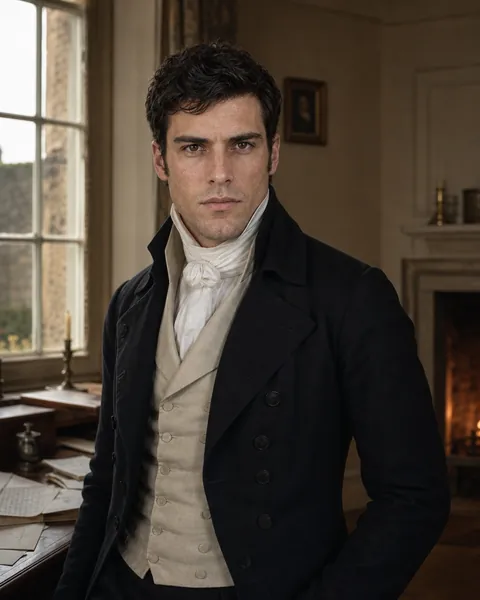 Mr Darcy
Fitzwilliam Darcy of Pemberley, the hero of Pride and Prejudice
-
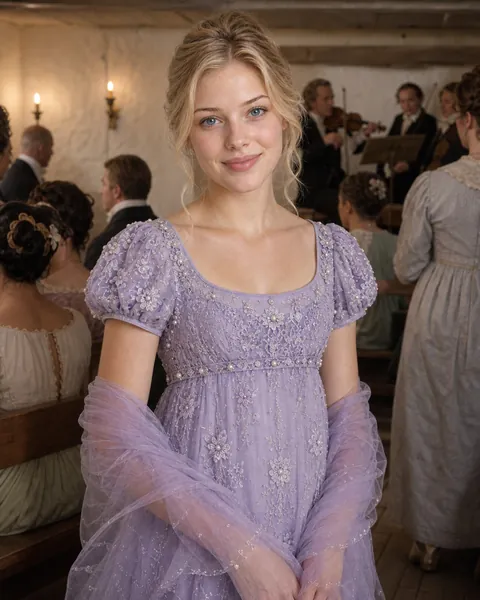 The Bennet sisters
Jane, Elizabeth, Mary, Kitty and Lydia, in order
-
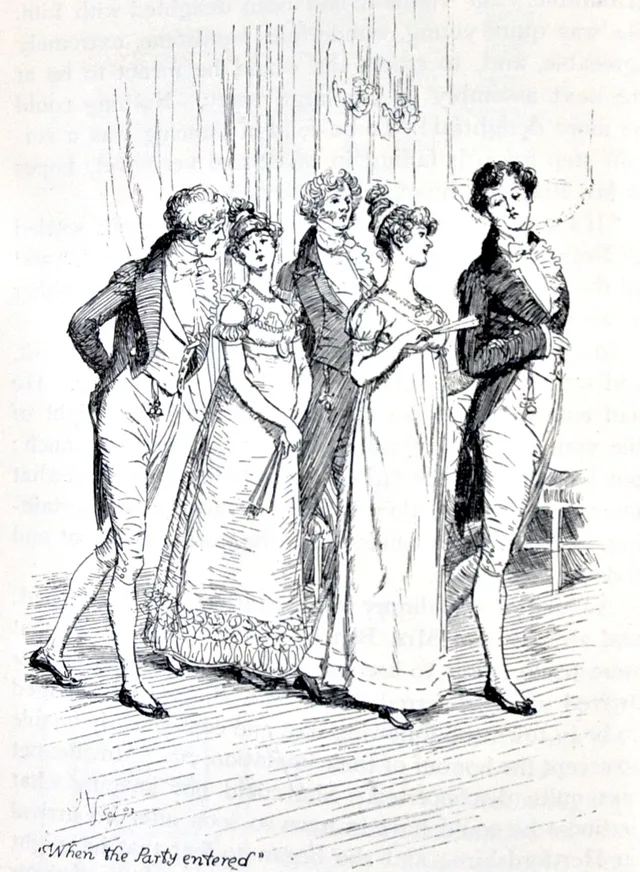 Pride and Prejudice summary
The whole story, in a paragraph and then chapter by chapter
-
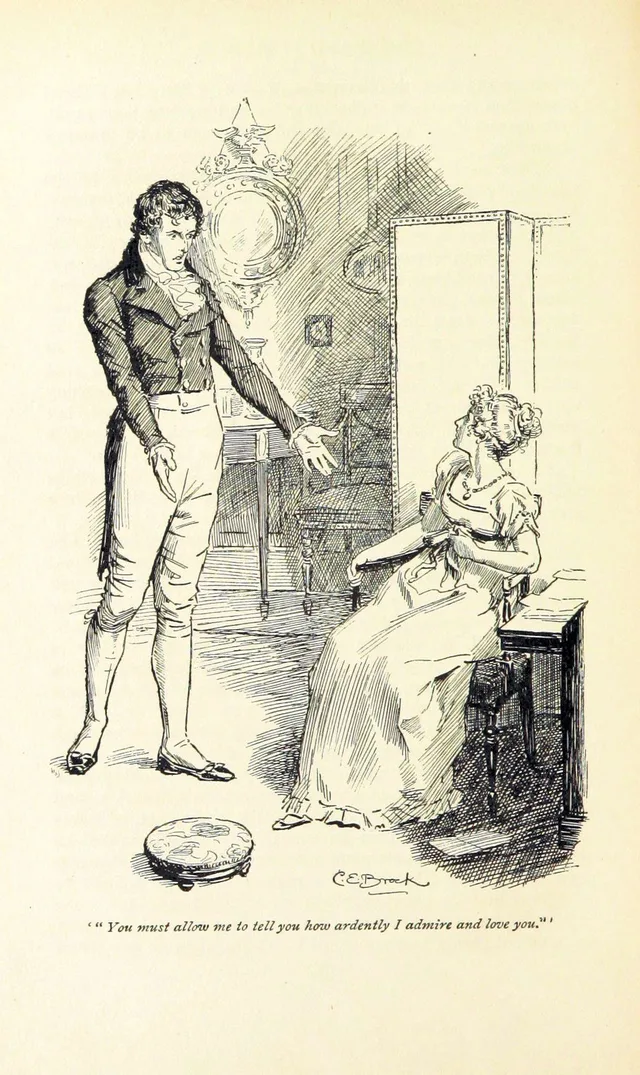 Pride and Prejudice quotes
The best lines, word for word, with the chapter and the scene
-
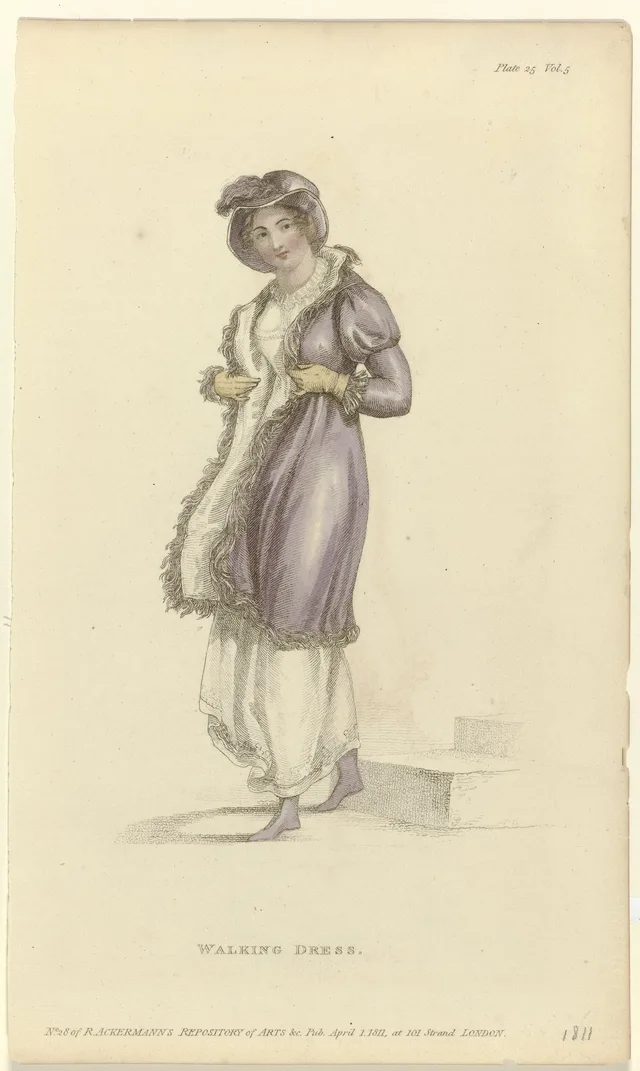 Regency era fashion
What women and men wore in Jane Austen’s England
-
Pride and Prejudice characters
Who’s who, from Elizabeth Bennet to Mr Collins


My courage always rises with every attempt to intimidate me.
Sit for your portrait as Elizabeth Bennet in Jane Austen Photo Studio for iPhone. Your first three portraits are free.
 Download on theApp Store

On a computer? Scan with your iPhone camera.