


Jane Austen · 1813
Pride and Prejudice summary
The whole story, in a paragraph and then chapter by chapter
This Pride and Prejudice summary tells the whole story of Jane Austen’s 1813 novel: how Elizabeth Bennet, the clever second of five daughters with no fortune, misjudges the proud, rich Mr Darcy, refuses him, learns the truth, and marries him. It starts with the short version, then follows the plot through each of the novel’s three volumes.
Pride and Prejudice in one paragraph
Spoilers from here. When rich, good-natured Mr Bingley rents Netherfield Park in Hertfordshire, Mrs Bennet sees a husband for one of her five daughters, and he soon falls for the eldest, Jane. His proud friend Mr Darcy slights the second, Elizabeth, who takes against him and believes the charming officer Mr Wickham’s story that Darcy cheated him. Darcy separates Bingley from Jane, then astonishes Elizabeth by proposing to her; she refuses him furiously. His letter explains everything, and she realises she has been blind. Visiting his estate, Pemberley, she finds him changed. When her youngest sister Lydia runs away with Wickham, Darcy secretly forces the marriage that saves the family. Bingley returns to marry Jane, Darcy proposes again, and Elizabeth accepts.
- Author
- Jane Austen, published anonymously “by the author of Sense and Sensibility”
- Published
- 28 January 1813, in three volumes
- Length
- 61 chapters, about 122,000 words, roughly eight hours to read
- Setting
- Hertfordshire, Kent, Derbyshire and London, in the early 1810s
- Main characters
- Elizabeth Bennet, Mr Darcy, Jane Bennet, Mr Bingley, Mr Wickham
- Ending
- A double wedding: Elizabeth marries Darcy and Jane marries Bingley
Chapters 1–23
Volume one: Netherfield and first impressions
A single man of large fortune (chapters 1–2). The novel opens with its famous line, “It is a truth universally acknowledged, that a single man in possession of a good fortune, must be in want of a wife”, and with Mrs Bennet’s news that Netherfield Park is let at last, to a Mr Bingley with four or five thousand a year. The Bennets have five unmarried daughters and an estate that will pass to a male cousin, so the stakes are clear from the start.
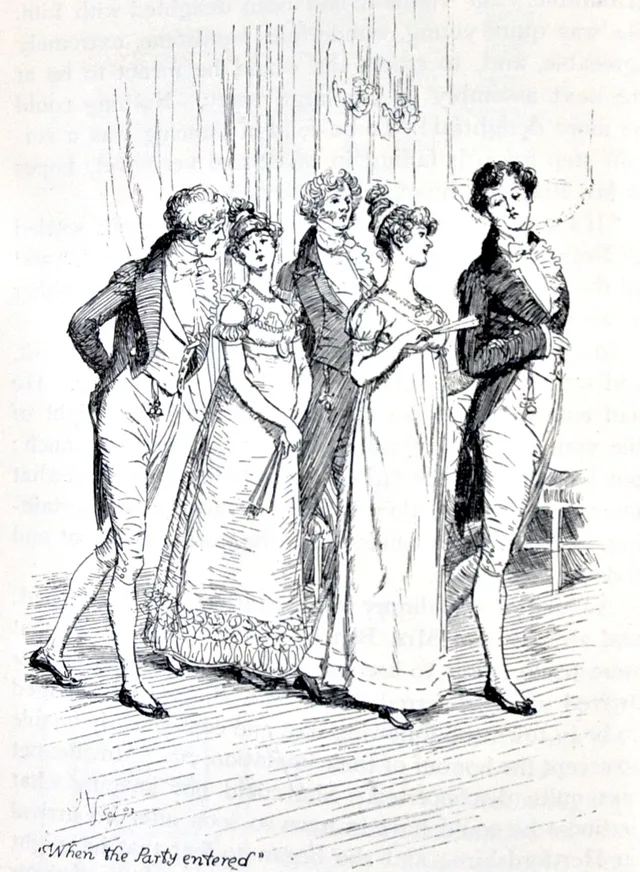
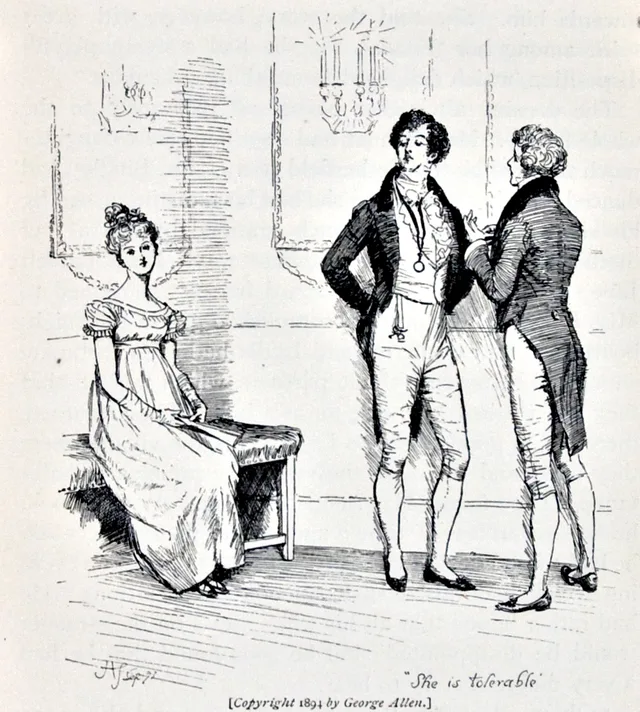
The Meryton assembly (chapter 3). Bingley is charming and dances twice with Jane. His friend Darcy, who has ten thousand a year, refuses to dance with anyone outside his party and is overheard calling Elizabeth “tolerable: but not handsome enough to tempt me”. The neighbourhood decides he is the proudest man in the world.
Netherfield (chapters 6–12). Darcy begins, against his will, to admire Elizabeth’s “fine eyes”. Jane is invited to dine at Netherfield, sent on horseback by her mother in the hope of rain, falls ill and has to stay. Elizabeth walks three muddy miles to nurse her, and spends several days sparring with Darcy while Bingley’s sister Caroline, who wants Darcy for herself, grows jealous.
Mr Collins and Mr Wickham (chapters 13–17). Mr Collins, the pompous clergyman who will inherit Longbourn, arrives meaning to marry one of the daughters. At Meryton the sisters meet Mr Wickham, a handsome new militia officer, who tells Elizabeth that Darcy refused him a living in the church that Darcy’s father intended for him. She believes every word.
The Netherfield ball (chapter 18). Elizabeth dances with Darcy and challenges him about Wickham; her family embarrass themselves in every possible way; and Darcy watches Jane and concludes she does not love his friend.
Two proposals (chapters 19–23). Mr Collins proposes to Elizabeth and refuses to take no for an answer until her father backs her. The Bingley party leaves for London, and Caroline writes that they will not return. Within three days of Elizabeth’s refusal, her sensible friend Charlotte Lucas accepts Mr Collins, for the security of a home.
Chapters 24–42
Volume two: Hunsford, the proposal and the letter
Jane in London (chapters 24–26). Jane stays with her aunt and uncle Gardiner in Gracechurch Street. Caroline Bingley calls on her coldly and late, and Bingley never comes. Wickham, meanwhile, shifts his attentions to Miss King, who has just inherited ten thousand pounds.
Rosings (chapters 27–33). In March, Elizabeth visits Charlotte at Hunsford parsonage in Kent, beside Rosings Park, the estate of Mr Collins’s patroness, Lady Catherine de Bourgh. Lady Catherine’s nephews arrive: Darcy and his cousin Colonel Fitzwilliam. Darcy keeps meeting Elizabeth on her walks. Then the Colonel lets slip that Darcy recently saved a friend from “a most imprudent marriage”, and Elizabeth realises he means Bingley and Jane.
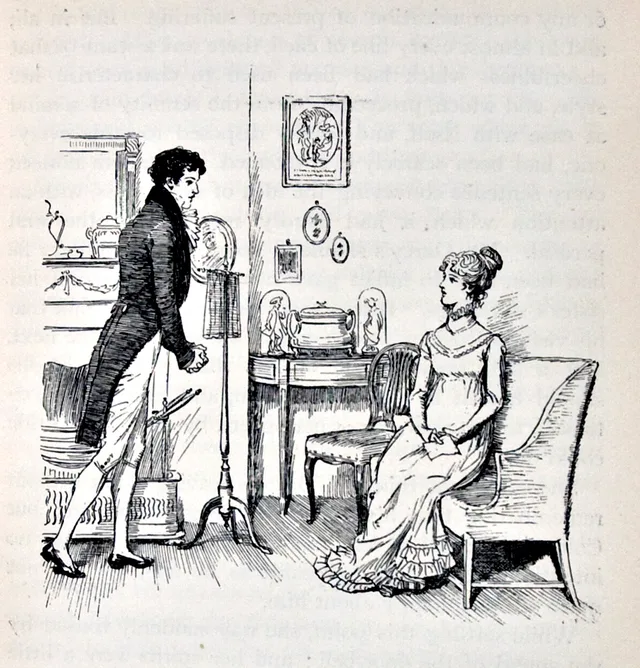
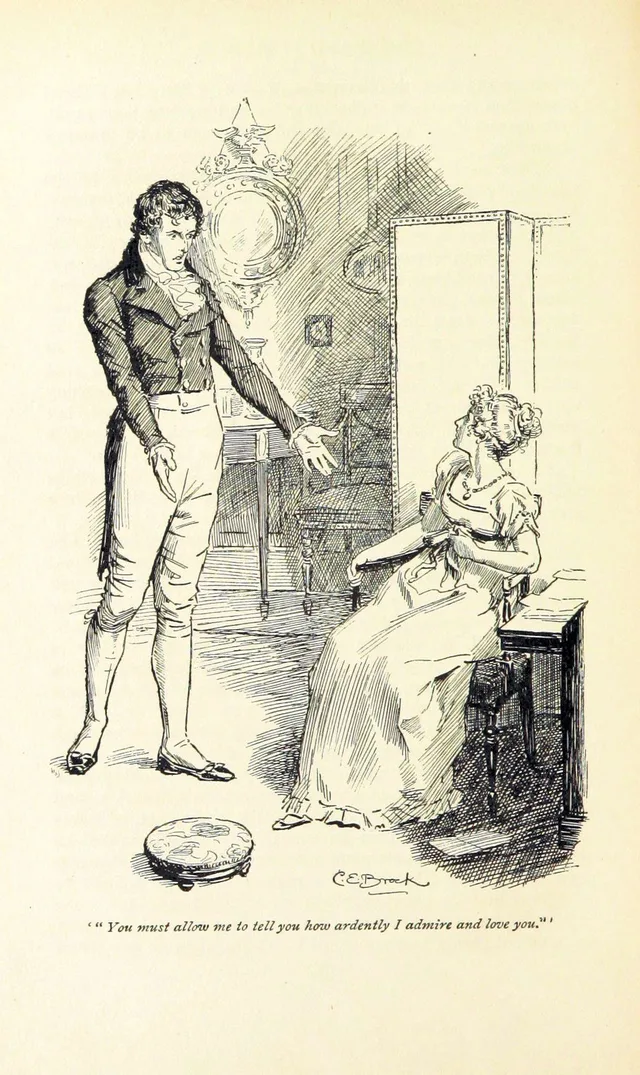
The proposal (chapter 34). That evening Darcy calls and declares, “In vain have I struggled. It will not do. My feelings will not be repressed.” He also explains how inferior her family is. Elizabeth refuses him, accusing him of ruining Jane’s happiness and Wickham’s prospects, and tells him he was “the last man in the world” she could be prevailed on to marry.
The letter (chapters 35–36). Next morning he hands her a letter. He did separate Bingley and Jane, believing Jane indifferent. And Wickham accepted three thousand pounds instead of the living, wasted it, then tried to elope with Darcy’s fifteen-year-old sister Georgiana for her fortune. Elizabeth sees that she has been prejudiced and vain: “Till this moment, I never knew myself.”
Brighton (chapters 37–42). Back at Longbourn, the militia is leaving for Brighton, and Lydia is invited to go with the colonel’s young wife. Elizabeth warns her father; he lets Lydia go. Elizabeth sets out on a summer tour with the Gardiners, cut short from the Lakes to Derbyshire, where Darcy’s estate lies.
Chapters 43–61
Volume three: Pemberley, Lydia and the second proposal
Pemberley (chapters 43–45). Told the family is away, Elizabeth tours Pemberley. The housekeeper praises Darcy as the best master that ever lived. Then he appears, gracious to the Gardiners and eager for Elizabeth to meet his sister. Elizabeth’s feelings change completely.
Lydia elopes (chapters 46–50). Letters from Jane bring disaster: Lydia has run off from Brighton with Wickham, who has no intention of marrying her. Elizabeth tells Darcy, who leaves at once, and she assumes she will never see him again. Mr Bennet and Mr Gardiner search London. Suddenly the couple are found and Wickham agrees to marry Lydia on surprisingly modest terms.
The secret (chapters 51–52). Lydia, back home and proud of her ring, lets slip that Darcy was at her wedding. Mrs Gardiner’s letter reveals the rest: Darcy found them, paid Wickham’s debts, bought his commission and arranged everything, asking that no one should know.
Jane and Bingley (chapters 53–55). Bingley returns to Netherfield with Darcy, calls at Longbourn and finally proposes to Jane, who is accepted with joy.
Lady Catherine (chapters 56–57). Hearing a rumour that Elizabeth will marry Darcy, Lady Catherine descends on Longbourn and demands she promise never to accept him. Elizabeth refuses to promise anything: “He is a gentleman; I am a gentleman’s daughter; so far we are equal.”
The second proposal (chapters 58–60). Lady Catherine’s report gives Darcy hope. Walking with Elizabeth, he says, “You are too generous to trifle with me,” and she accepts him. Her stunned family, who think she dislikes him, have to be persuaded; her father gives his consent once he hears what Darcy did for Lydia.
How does Pride and Prejudice end?
Chapter 61 is a short epilogue. Elizabeth and Jane marry Darcy and Bingley on the same day. Mrs Bennet is delighted, though no wiser. After a year at Netherfield, Bingley buys an estate in a county next to Derbyshire, so the two sisters live within thirty miles of each other. Kitty improves greatly in her elder sisters’ company; Mary stays at home. Lydia and Wickham drift from place to place, always short of money. Lady Catherine is furious at first, then relents. Georgiana makes Pemberley her home with Elizabeth, and the Gardiners, whose visit to Derbyshire brought the couple together, remain their dearest friends.
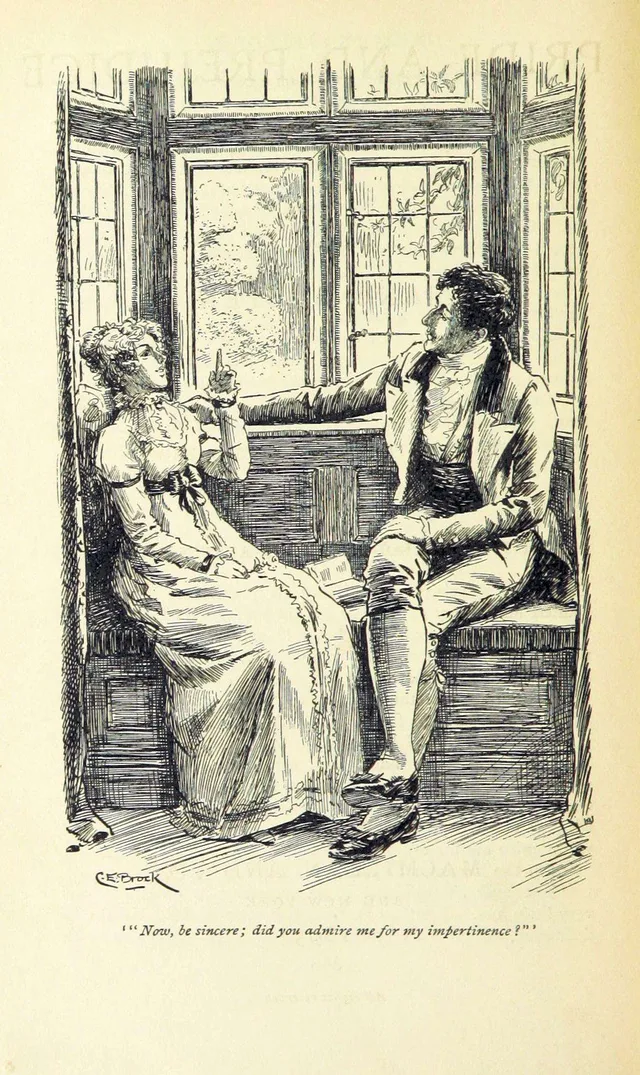
Where and when is Pride and Prejudice set?
Austen first drafted the novel in 1796–97 as First Impressions and revised it before publication in 1813, so it belongs to the late Georgian and Regency years: the militia in Meryton and Brighton are there because Britain was at war with France. Its world is the country gentry of southern and midland England, moving between four main places.
| Place | County | What happens there |
|---|---|---|
| Longbourn and Meryton | Hertfordshire | The Bennets’ home, a mile from the market town and its militia |
| Netherfield Park | Hertfordshire | Bingley’s rented house: Jane’s illness and the ball |
| Hunsford and Rosings Park | Kent | The Collinses’ parsonage, Lady Catherine’s house, the first proposal |
| Pemberley and Lambton | Derbyshire | Darcy’s estate, where Elizabeth sees him anew |
| Gracechurch Street | London | The Gardiners’ home, near Mr Gardiner’s business |
| Brighton | Sussex | The militia camp, from which Lydia elopes |
Every place is described in our guide to Pemberley, Longbourn and Netherfield.
What is Pride and Prejudice really about?
- Pride and prejudice, in both of them. Darcy is proud of his rank; Elizabeth is proud of her judgement. Each has to be humbled by the other before they can be happy.
- First impressions. Nearly every first impression in the book is wrong: Darcy is better than he seems, Wickham worse, Jane’s feelings deeper and Charlotte’s more practical.
- Marriage and money. The entail, the thousand-pound fortunes and Charlotte’s choice show why marriage was the only security for women of the gentry. Austen sets four marriages side by side: for love and esteem (Elizabeth), love and kindness (Jane), security (Charlotte) and appetite (Lydia).
- Class and character. Lady Catherine has rank without manners; the Gardiners, in trade, have manners without rank. The novel always prefers the second.
Above all it is a comedy, built on dialogue. Much of its pleasure is in lines that still quote perfectly; see our collection of Pride and Prejudice quotes.
Why is Pride and Prejudice hard to read, and how to enjoy it
Most first-time readers find the opening chapters slow, for three reasons. The sentences are long and balanced, in the style of the 1790s. Austen often slips into a character’s thoughts without saying so, so a line that sounds like the narrator may be Mrs Bennet’s opinion, and much of the comedy is irony. And the plot depends on things she never explains: entails, incomes, who may dance with whom and why an elopement is ruin.
- Read the first three chapters twice. After the assembly, the pace and the jokes become easier to hear.
- Keep a who’s who to hand: our Pride and Prejudice characters guide, or the Bennet sisters in order.
- Read the dialogue aloud. Mrs Bennet, Mr Collins and Lady Catherine are written to be heard.
- Remember the money. Every proposal is also a financial decision, and that is the point.

Four questions
Which Pride and Prejudice character are you?
Four questions from the novel. Find your match, then sit for their portrait.
- The same quiz as in the app
- Every result has its portrait waiting
- Share it and dare a friend to find their match

Question 1 of 4
At a ball, you…
- Dance every single dance
- Stand apart and judge the company
- Make sure the grandest person there knows you
- Look after whoever has been left out
- Hope one particular person notices you
Your questions
Questions about the plot
Anything else? Write to us at [email protected].
What happens in Pride and Prejudice?
Elizabeth Bennet, the second of five daughters with little money, takes a dislike to the proud, rich Mr Darcy and refuses his proposal. His letter shows her she misjudged him, and after he secretly saves her sister Lydia from disgrace, she accepts his second proposal. Her sister Jane marries his friend Mr Bingley.
What is the most famous line in Pride and Prejudice?
The first: “It is a truth universally acknowledged, that a single man in possession of a good fortune, must be in want of a wife.” It is ironic: really, every family with daughters wants the single man.
How does Pride and Prejudice end?
Elizabeth marries Mr Darcy and Jane marries Mr Bingley, and the two couples settle within thirty miles of each other in Derbyshire and the neighbouring county.
What is the point of Pride and Prejudice?
That first impressions mislead, that both pride and prejudice must be overcome before people can understand each other, and that marriage should rest on respect as well as love, at a time when it was also a woman’s only financial security.
How long is Pride and Prejudice?
About 122,000 words in 61 chapters, first published in three volumes. Most readers take around eight hours.
When is Pride and Prejudice set?
In England around the turn of the nineteenth century: Austen drafted it in 1796–97 and revised it before it was published in 1813.
How old is Elizabeth Bennet?
She is 20, and Mr Darcy is 28.
Keep reading
More from the novels
-
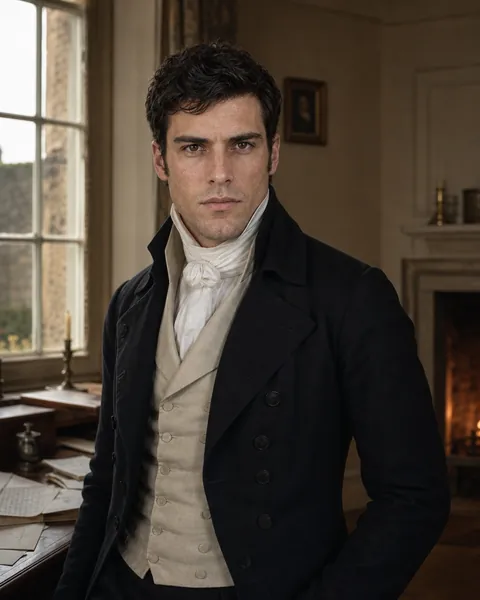 Mr Darcy
Fitzwilliam Darcy of Pemberley, the hero of Pride and Prejudice
-
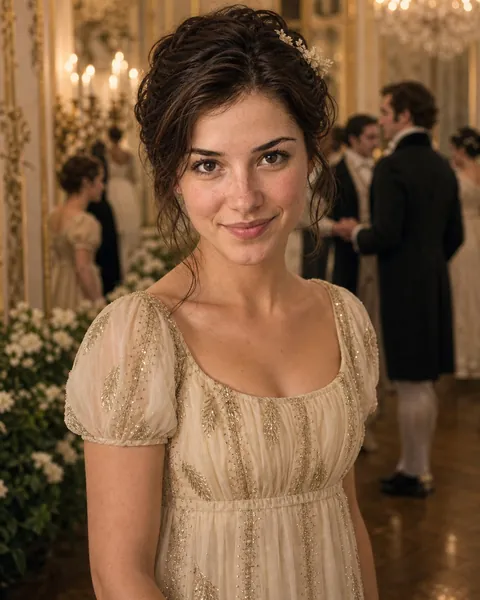 Elizabeth Bennet
The quick, laughing heroine of Pride and Prejudice
-
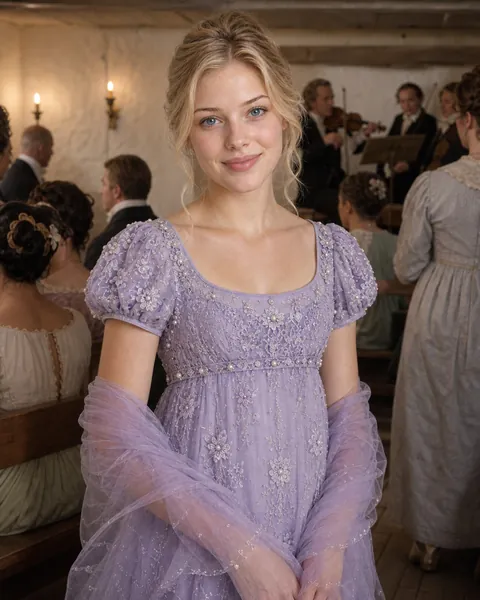 The Bennet sisters
Jane, Elizabeth, Mary, Kitty and Lydia, in order
-
 Pride and Prejudice quotes
The best lines, word for word, with the chapter and the scene
-
Pemberley, Longbourn and Netherfield
Every house, town and county in Pride and Prejudice
-
Pride and Prejudice characters
Who’s who, from Elizabeth Bennet to Mr Collins
-
 The best Jane Austen book
All six novels, ranked, with the order they were published




It is a truth universally acknowledged, that a single man in possession of a good fortune, must be in want of a wife.
Sit for your portrait as Elizabeth, Darcy, Jane, Lydia or Lady Catherine in Jane Austen Photo Studio for iPhone. Your first three portraits are free.
 Download on theApp Store

On a computer? Scan with your iPhone camera.